Ad Hoc Spending: The Silent Budget Killer

We’ve All Been There

We’ve all done it. A quick £3 coffee here, a cheeky Deliveroo there, a little “treat” from Amazon to cheer up a rough day. These spends seem small in the moment, but they add up quicker than you realise, until your balance says, ‘try again later’.

Welcome to the world of ad hoc spending, the silent budget killer that doesn’t come with a warning sign, doesn’t feel reckless, but can blow your budget in just a few weeks.


What Exactly Is Ad Hoc Spending

Ad hoc spending is money you spend without planning or intention. It’s those everyday purchases that didn’t make it into your planned budget and they usually don’t feel like a big deal:

  • Buying lunch instead of using what’s in the fridge
  • Ordering an Uber instead of catching the bus
  • A few “little things” from Home Bargains that turn into a £40 receipt
  • Scrolling and spending on Shein, Amazon, or Tiktok Shop

It’s all the stuff you don’t think about and that’s exactly the problem.


The Psychology: Why Our Brains Work Against Us

The Convenience Trap

Modern life moves fast, and convenience often wins over careful consideration. We’re not being reckless we’re being human in a world designed to make spending effortless.

The “Small Purchase” Illusion

Our brains struggle with small, frequent expenses. A £4 coffee doesn’t trigger the same mental alarm as a £400 purchase, even though those coffees can add up to more over time.

Emotional Spending Triggers
  • Stress relief: “I’ve had a tough day, I deserve this”
  • Reward seeking: “I’ve been good with money, this little treat is fine”
  • Social pressure: Keeping up with friends’ spending habits
  • Decision fatigue: When we’re tired, we default to the easy (expensive) option
The Instant Gratification Cycle

“Each small purchase gives us a tiny dopamine hit, reinforcing the behaviour and making it harder to resist next time”.


The Real Cost

Financial Impact
  • Erodes financial control: You lose sight of where your money actually goes
  • Masks spending patterns: Real habits stay hidden under the “it’s just a few pounds” excuse
  • Steals from your goals: Every unplanned £5 is £5 not going toward that holiday, house deposit, or debt payoff
  • Creates budget leaks: Your financial plan becomes like a bucket with holes
Emotional Cost
  • Guilt after the spending high wears off
  • Anxiety about money at the end of the month
  • Feeling out of control with finances
  • Frustration when bigger goals feel impossible to reach

The Solution: Taking Back Control

1. Track Everything (Yes, Everything)

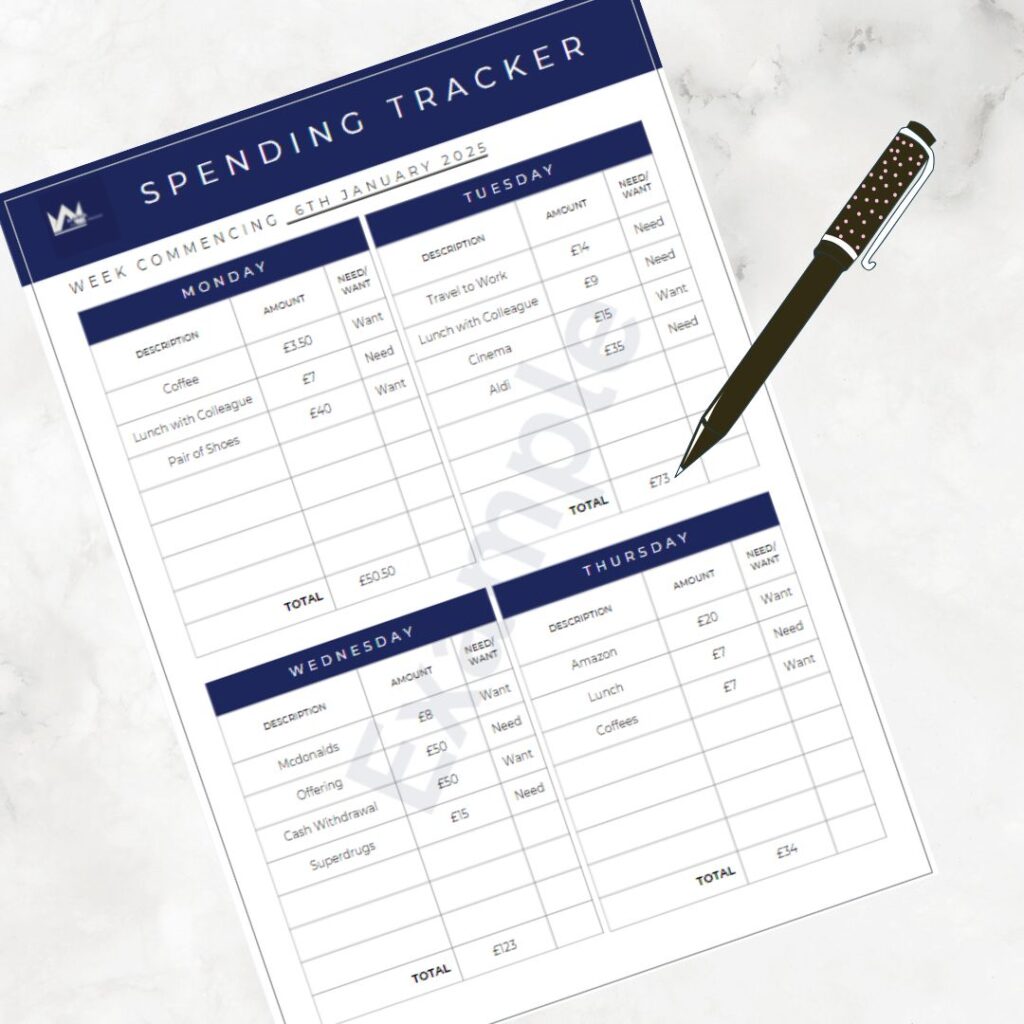
Enter your new best friend: a spending tracker;

Tracking your ad hoc spending:

  • Creates awareness, no more financial blind spots
  • Highlights patterns (hello, stress-spending at 9pm!)
  • Helps you course-correct in real time
  • Builds accountability to your goals

Download the Free Spending Tracker Below

2. The 3-Second Pause Method

Before any unplanned purchase, pause and ask:

  • Do I NEED this or just WANT it?
  • Will I still care about this tomorrow?
  • Does this move me toward my goals or away from them?
3. Plan for Spontaneity

Let’s be realistic you’re going to treat yourself sometimes, and that’s okay! The trick is to plan for it.

Create a weekly or monthly “spontaneous spending” budget. Once it’s gone, it’s gone and you’ll naturally become more selective about what’s truly worth it.

4. Make Your Goals Visible

Write your financial goals somewhere or develop a vision board and place it somewhere you’ll see it daily. When your future self has a voice, it’s easier to resist impulse purchases.

Your 7-Day Challenge

Ready to take back control? Here’s your challenge:

  1. Track every purchase for 7 days (yes, even that £1.20 for gum)
  2. Categorise each spend as a NEED or WANT
  3. Reflect honestly where could you tweak or reduce?

No shame, no guilt. Just honesty and progress.

Remember: Financial freedom isn’t about deprivation, it’s about intention.

Let’s Talk: Your Ad Hoc Spending Story

Do you recognise any of your habits in this post? What’s your biggest budget killer, Uber Eats? Amazon Prime? That spontaneous TK Maxx run?

Share your story in the comments below. I love hearing how real people are reclaiming control of their money, one intentional decision at a time.

Ready to Start Tracking?

If you’re ready to finally feel on top of your money, try the Manna Spending Tracker, designed to be simple and built with real life in mind.

Small changes in awareness can lead to big changes in your bank account.

Natasha Smith
Natasha Smith

With over 24 years of experience in the financial services industry, I have built a career grounded in trust, professionalism, and a deep commitment to helping people secure their financial future. I am a fully qualified Independent Financial Adviser with Throgmorton Private Capital Ltd, providing holistic financial advice to individuals, families, and business owners across all life stages, from building wealth to planning for retirement and everything in between.

My journey began in mortgage and protection advice, but my passion for supporting clients through every chapter of their financial lives led me to specialise in full financial planning. Over the years, I’ve had the privilege of working with a wide range of clients, from mass affluent individuals to high-net-worth households. No two clients are ever the same, and that’s what I love about this profession the opportunity to tailor solutions that genuinely make a difference.

Financial planning is not just about numbers, it’s about people. It’s about building confidence, clarity, and long-term security. My 'why' has always been to make expert financial advice more accessible, inclusive, and empowering for those who need it most. That passion led me to launch Manna Financial Freedom C.I.C, a social enterprise dedicated to improving financial literacy and promoting economic empowerment, particularly among women, people of colour, and underserved communities.

Through Manna, we provide financial education, coaching, and tools to help individuals move from surviving to thriving. It’s my way of giving back and using my expertise to bridge the gap between financial exclusion and financial freedom.

Whether I’m advising clients through Throgmorton or mentoring through Manna, my goal remains the same: to help people make informed decisions, live intentionally, and build a future they can be proud of.

Articles: 9